Jams, Jellies, and Preserves: How to Stock Your Pantry with the Best of Summer
Summer's sweetest flavors don't have to end when the season does. Stop by Open Air Market Produce Stand in London, KY and take home a jar of handcrafted jam, jelly, or preserve made the old-fashioned way.
There's Something Special About a Jar Made with Care
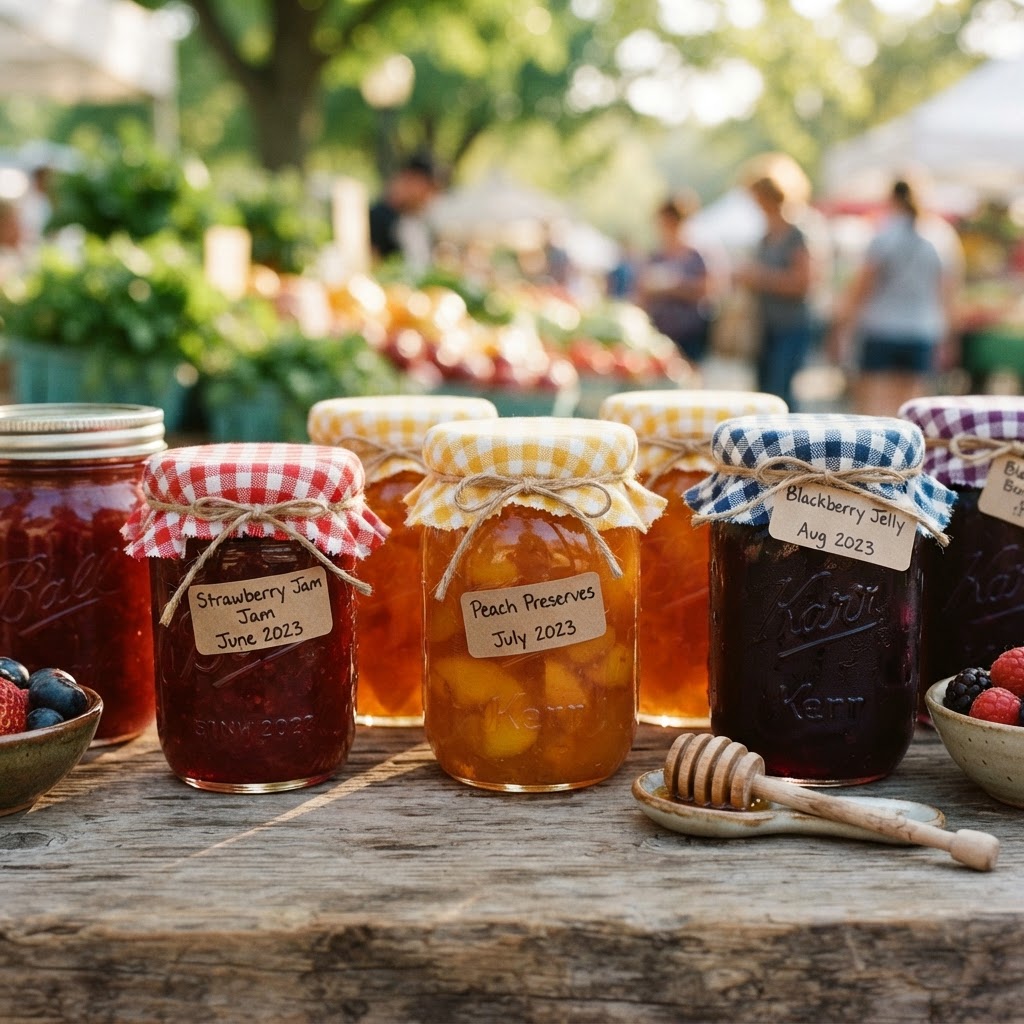
Walk up to the shelves at Open Air Market Produce Stand on Barbourville Road and you'll notice the jars almost immediately — lined up neatly, glowing in the light like little gems. Deep red strawberry jam. Amber peach preserves. Dark, jewel-toned blackberry jelly. These aren't factory-filled supermarket jars with ingredient lists you need a chemistry degree to understand. These are home-canned the old-fashioned way, made in small batches the way generations of Kentucky families have always done it.
There's a reason people drive from all over Laurel County to pick up a jar or two. Once you've spread real homemade jam on a biscuit, it's genuinely hard to go back. The flavor is fuller, the texture is more honest, and you can taste the care that went into every batch. We're proud to carry these handcrafted jars right here at the stand, and today we want to talk about what makes them worth seeking out — and how to use them beyond just toast.
Jam vs. Jelly vs. Preserves: What's Actually the Difference?
People use these three words pretty interchangeably, but they're not the same thing — and knowing the difference helps you pick the right jar for the right purpose.
Jelly is made from fruit juice only, which gives it that clear, firm, spreadable consistency. It's smooth all the way through, no fruit chunks, and it holds its shape when you spoon it out. Grape jelly on a peanut butter sandwich is the classic example, but apple jelly, muscadine jelly, and pepper jelly all fall into this category too. Jam is made from crushed or chopped fruit, so it's thicker and a little less uniform — you might see small bits of fruit throughout, and it tends to have a more intense, fruity flavor. Preserves go one step further: they use whole or large pieces of fruit suspended in a syrup or gel. Strawberry preserves with big, identifiable strawberry chunks are a perfect example. Preserves tend to have the most textural complexity and the most pronounced fruit flavor of the three.
When you're browsing the jars at our stand, think about what you're planning to use it for. Jelly for clean spreading on bread or glazing meat. Jam for baking, stirring into oatmeal, or layering in desserts. Preserves for showcasing the fruit itself — on a cheese board, over ice cream, or spooned straight from the jar. Yes, that last one counts.
Beyond the Biscuit: Unexpected Ways to Use a Jar of Homemade Jam
The biscuit-and-jam combination is sacred, and we'll never argue against it. But if you've got a jar of good homemade jam or jelly in your pantry, it's worth thinking a little bigger.
A spoonful of pepper jelly over a block of cream cheese is one of the easiest appetizers you'll ever put on a table — serve it with crackers and watch it disappear in minutes. Blackberry or grape jelly makes an outstanding glaze for grilled chicken or pork chops; just brush it on in the last few minutes of cooking and let the heat caramelize it into something genuinely special. Peach preserves stirred into a pan sauce with a little butter and thyme is a combination that sounds fancy but takes about five minutes to pull together.
For bakers, jam is a workhorse ingredient. Swirl it into muffin batter. Layer it between cake rounds before frosting. Fill thumbprint cookies. Spread it across a sheet of puff pastry, roll it up, slice it, and bake for a breakfast pastry that looks like it came from a bakery. Strawberry jam dissolved into lemonade makes a gorgeous pink drink that kids and adults both love. A jar of good homemade jam isn't just a condiment — it's a kitchen tool that earns its shelf space.
Why Home-Canned Beats Store-Bought Every Single Time
Walk down the jam aisle at a big-box grocery store and you'll find plenty of options — but read the ingredient labels and you'll notice a few things. High-fructose corn syrup, artificial pectin, added colors, preservatives with names you can't pronounce. Even the premium brands tend to lean heavily on sweeteners to compensate for fruit that was picked before it was fully ripe and processed at industrial scale.
Home-canned jams and preserves work differently. They start with ripe, flavorful fruit at the height of the season — the kind of fruit that actually tastes like something. The batches are small, which means more attention and more control over the final product. The sweetness comes from real sugar balancing real fruit flavor, not from artificial enhancement. And because the canning process itself is the preservative, many small-batch home canners use far fewer additives than industrial manufacturers.
When you pick up a jar at a produce stand in London, KY, you're also getting something else that no grocery shelf can offer: connection to the season. That jar of peach preserves captures what summer tasted like at its peak. Cracking it open in January is genuinely one of the small joys of Kentucky life.
Cheese Boards, Gift Baskets, and the Art of Giving a Really Good Jar
One of the most underrated uses for a jar of beautiful homemade jam or jelly is giving it as a gift. In a world full of generic gift cards and forgettable bottles of wine, a carefully chosen jar of handcrafted preserves stands out. It's thoughtful, it's local, it's useful, and it lasts on the shelf for months.
Pair a jar of strawberry jam with a wedge of sharp cheddar and a sleeve of good crackers, and you've got a host gift that people will actually remember. Mix and match a few flavors — maybe a fruit jam, a pepper jelly, and a rich apple butter — tuck them into a basket with a small jar of local honey, and you've built a Kentucky pantry gift that would make anyone happy. Teachers, neighbors, out-of-town guests, new homeowners — a handmade jar says something a gift card simply can't.
Charcuterie and cheese boards have become a real thing in Kentucky kitchens over the last several years, and jam and jelly are essential to building a good one. Fruit preserves cut through the richness of aged cheeses beautifully. Pepper jelly adds heat and sweetness that balances cured meats. A dollop of fig or blackberry jam next to a slice of brie turns a simple board into something that looks genuinely impressive. Stop by the stand and grab a few different jars — it's the easiest way to elevate your next gathering.
Come See What's on the Shelf This Week
Open Air Market Produce Stand has been a fixture at 1594 Barbourville Rd in London, Kentucky since 1984 — and for over four decades, we've been the place Laurel County families come when they want real food that's been handled with care. Our selection of home-canned jams, jellies, and preserves changes with the season and the batches available, so the best time to come is always soon.
We're open seven days a week: Monday through Friday from 10 a.m. to 6 p.m., Saturday from 9 a.m. to 6 p.m., and Sunday from 11 a.m. to 6 p.m. Parking is never a problem, and browsing is always free. Whether you're searching for fresh produce in London, Kentucky, stocking up for fall baking, or just looking for the perfect something to bring to a friend, we'd love to see you. Come pick out a jar — or a few. Summer's best flavors are waiting right on the shelf.
1594 Barbourville Rd, London, KY 40744 · Mon–Fri 10–6 · Sat 9–6 · Sun 11–6
Get Directions
Serving London, Kentucky since 1984, Open Air Market is the oldest and longest-running produce market in Laurel County. For over 40 years, our family-owned stand at 1594 Barbourville Rd has been the trusted source for fresh, seasonal fruits and vegetables in southeastern Kentucky. We hand-select every item for ripeness and quality — the way it's been done for four decades. Open 7 days a week.