Heirloom and Slicing Tomatoes at Peak Season: How to Buy, Use, and Savor Every Slice
August is the undisputed peak of tomato season, and the heirloom and slicing tomatoes at Open Air Market Produce Stand right now are the kind that remind you why homegrown flavor can't be faked. Here's how to pick them, use them, and make every single one count.
August Is the Moment Tomatoes Have Been Waiting For
There is a narrow window every summer when tomatoes stop being a grocery store afterthought and become something worth planning a meal around. That window is right now. Mid-August in Kentucky is when slicing tomatoes hit their deepest color, their most complex flavor, and their most satisfying weight in your hand. The skins go thin, the flesh goes dense and juicy, and the sweetness balances against that bright, almost winey acidity that only a truly ripe summer tomato can deliver.
At Open Air Market Produce Stand on Barbourville Road in London, the tomato display right now is genuinely worth a special trip. Heirloom varieties sit alongside big beautiful slicers, each one a little different in shape and color — which is exactly how it's supposed to be. If you've been waiting for the right moment to stock up, this is it. Stop by any day this week; the stand is open Monday through Friday from 10 to 6, Saturday from 9 to 6, and Sunday from 11 to 6.
What's the Difference Between Heirloom and Slicing Tomatoes?
People use these terms a lot, but they're not the same thing, and knowing the difference helps you shop smarter. Slicing tomatoes are the classic large, round, red tomatoes most people picture — bred for thick walls, meaty flesh, and a size that's ideal for cutting into big rounds and layering into sandwiches or burgers. They're reliable, sturdy, and incredibly satisfying.
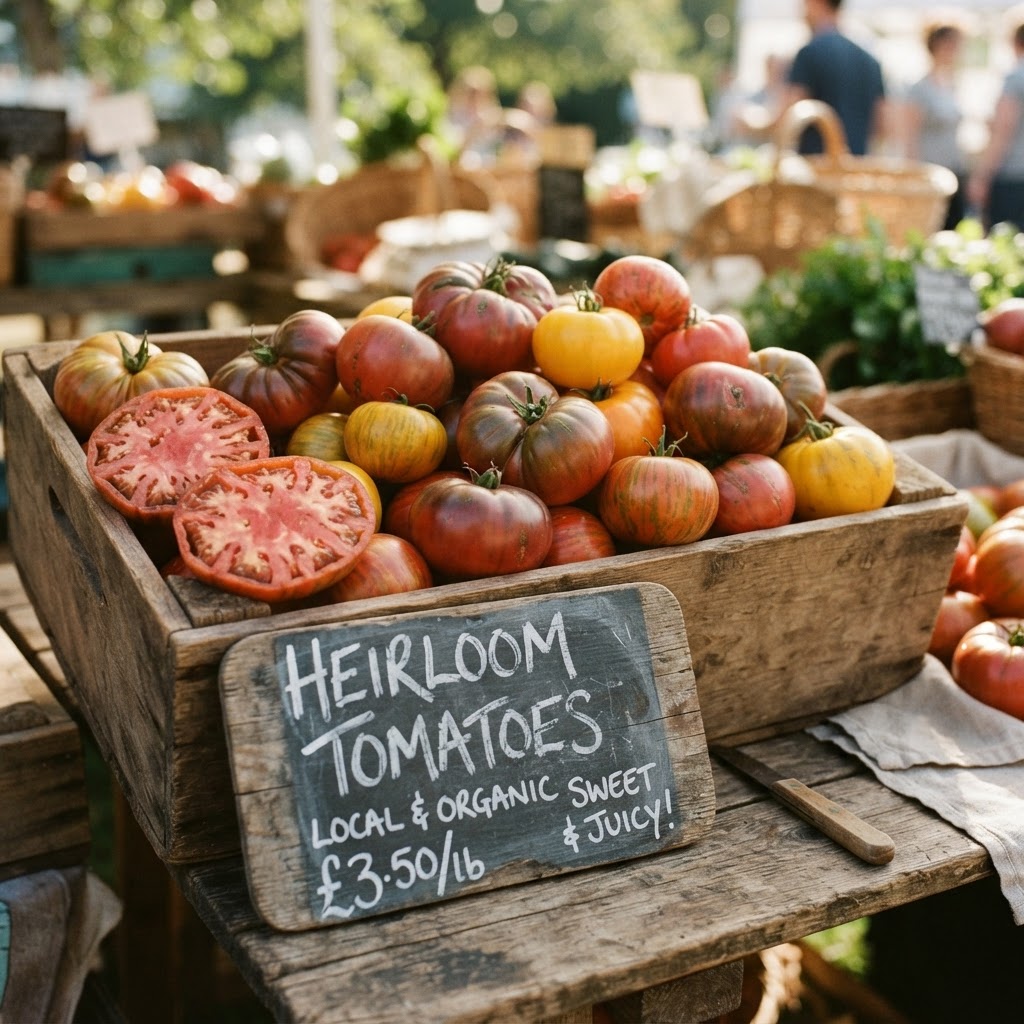
Heirloom tomatoes are open-pollinated varieties that have been grown and saved for generations. They tend to be more irregular in shape and come in a wider range of colors — deep purplish-red, bright orange, pale yellow, striped green and red — and they often carry more nuanced flavor than a standard hybrid. The tradeoff is that they can be a little more delicate and don't last as long once picked, which is exactly why buying them fresh from a local produce stand in London, KY is so much better than hunting for them at a big box store. Freshness is everything with heirlooms.
When you're at the stand, don't be afraid to pick up a few of each. A mixed plate of sliced heirlooms and classic red slicers side by side — drizzled with a little olive oil and flaky salt — is one of the simplest and most impressive things you can put on a summer table.
How to Pick a Great Tomato (and What to Avoid)
Color is a starting point, but it's not the whole story. A ripe slicing tomato should be deeply, evenly colored with no large green or pale yellow patches near the stem. Give it a gentle squeeze — it should yield slightly but not feel soft or mushy. Firm is fine; hard means it needs more time. Overly soft usually means it's past its peak.
For heirlooms, the rules are a little different. Slight surface cracking near the stem end is common and doesn't indicate a problem — it's actually a sign of rapid growth during peak season. Irregular shapes and varied coloring are completely normal. What you're looking for is a tomato that feels heavy for its size and smells like something when you hold it near the stem end. That tomato smell — earthy, slightly sweet, a little green — is one of the best indicators of genuine ripeness. If it doesn't smell like anything, it probably doesn't taste like much either.
The one thing to absolutely avoid: don't refrigerate your tomatoes before you eat them. Cold temperatures break down the cell walls and kill the flavor compounds that make a good tomato worth eating. Keep them on the counter, stem side down, and use them within a day or two of buying — especially heirlooms.
A Recipe Worth Making This Week: Heirloom Tomato and Burrata Salad
This dish requires almost no cooking skill and rewards you completely out of proportion to the effort involved. You'll need two or three large heirloom tomatoes in different colors, one ball of fresh burrata or fresh mozzarella, a handful of fresh basil, good olive oil, flaky sea salt, cracked black pepper, and a splash of aged balsamic vinegar if you have it.
Slice the tomatoes thickly — somewhere between a quarter inch and a half inch — and arrange them in overlapping layers on a wide, flat plate. Tear the burrata or mozzarella over the top so the creamy interior spills out across the tomatoes. Tuck fresh basil leaves between the slices. Drizzle generously with olive oil, scatter a good pinch of flaky salt over everything, crack some black pepper on top, and finish with a few drops of balsamic. That's it. Serve it immediately at room temperature with good crusty bread to soak up the juice.
The key to this recipe is using tomatoes that are genuinely ripe and flavorful — which is exactly what you'll find right now at the produce stand. Grab a mix of colors and sizes when you visit, and let the variety do the visual work for you.
The Best Cooked Tomato Recipe for When You Have Too Many
If you find yourself with a serious haul of slicing tomatoes — which is a real possibility when they're priced right and looking this good — a slow-roasted tomato situation is your best friend. Roasting concentrates the flavor and transforms even a basic red slicer into something almost jammy and intensely sweet.
Cut your tomatoes in half through the equator and lay them cut-side up on a rimmed baking sheet. Drizzle with olive oil, season with salt and pepper, and scatter a few smashed garlic cloves and fresh thyme or oregano across the pan. Slide them into a 300-degree oven and walk away for about two hours. When you come back, the tomatoes will have shrunk, darkened at the edges, and concentrated into something extraordinary. Use them as a pasta sauce base, spoon them over grilled chicken or fish, smear them on toast with ricotta, or freeze them in bags for a taste of August in the middle of January.
This is also a great use for any tomatoes that are getting very ripe and need to be used that day. Don't let a soft, over-ripe heirloom go to waste — roasting is incredibly forgiving and actually benefits from a tomato that's past its prime for eating fresh.
Tomatoes and the Stand: A Summer Ritual Worth Keeping
Open Air Market Produce Stand has been part of summer in Laurel County since 1984 — which means generations of families have been making the drive out to Barbourville Road for exactly this kind of seasonal produce moment. Tomato season is one of the reasons people keep coming back year after year. When the heirlooms are stacked up and the slicers are running big and red, there's a familiar energy at the stand that feels less like grocery shopping and more like participating in something.
If you've been meaning to stop by but keep putting it off, do yourself the favor this week. The parking situation is easy — plenty of room — and the staff knows the produce well enough to point you toward whatever's looking best that day. Whether you're picking up a couple of tomatoes for tonight's dinner or loading up a whole bag for canning and roasting, August 17, 2026 is as good a day as any to show up and see what's in season. Find the stand at 1594 Barbourville Rd in London, Kentucky, open all seven days of the week.
1594 Barbourville Rd, London, KY 40744 · Mon–Fri 10–6 · Sat 9–6 · Sun 11–6
Get Directions
Serving London, Kentucky since 1984, Open Air Market is the oldest and longest-running produce market in Laurel County. For over 40 years, our family-owned stand at 1594 Barbourville Rd has been the trusted source for fresh, seasonal fruits and vegetables in southeastern Kentucky. We hand-select every item for ripeness and quality — the way it's been done for four decades. Open 7 days a week.