Green Beans Done Right: How to Cook, Can, and Freeze Them at Peak Season
Green beans and pole beans are one of summer's most rewarding vegetables — and right now they're at their absolute best. Here's how to make the most of every handful.
The Bean You Shouldn't Wait On
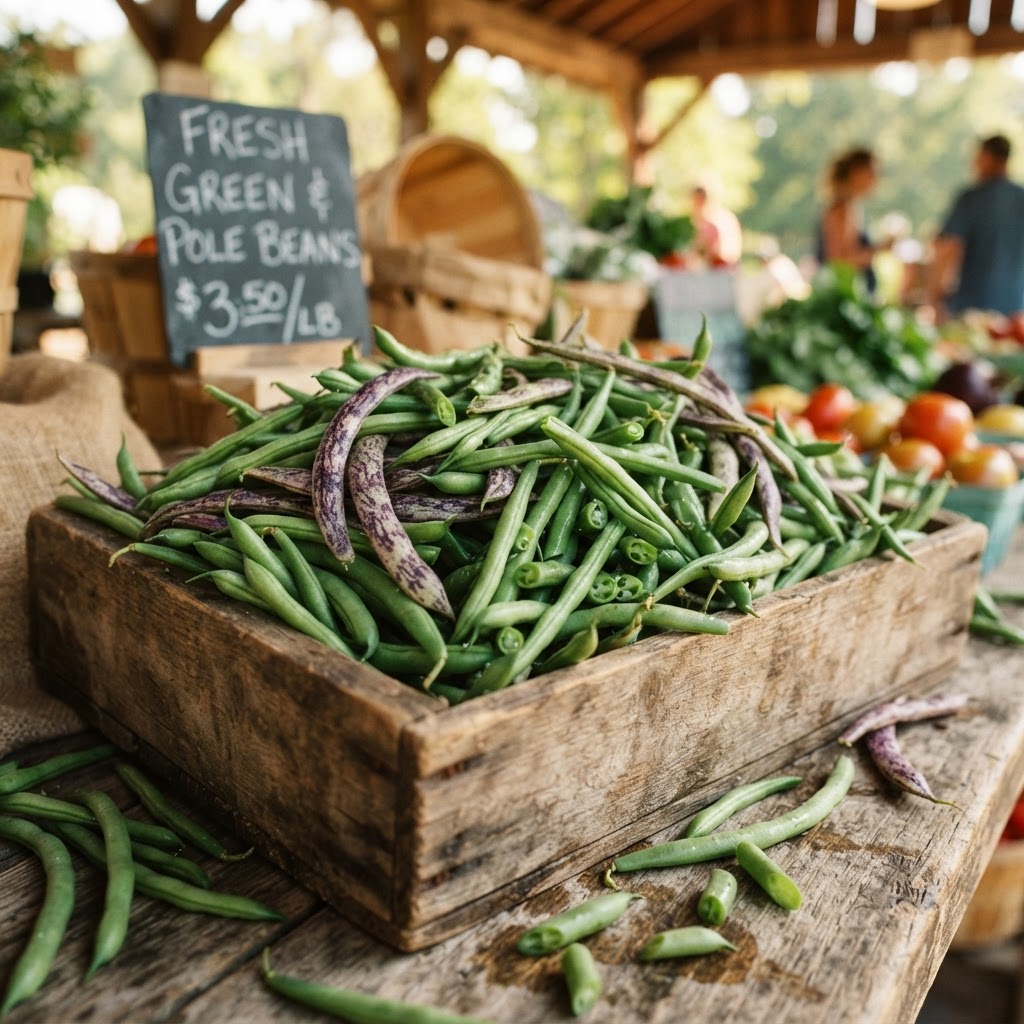
There's a particular moment in summer when green beans hit their peak — the pods are firm, bright, and snap clean when you bend one. That moment is right now. At Open Air Market Produce Stand on Barbourville Road in London, Kentucky, we've got fresh green beans and pole beans available this week, and they are exactly what a late-August haul should look like: vibrant, crisp, and loaded with that grassy-sweet flavor that reminds a lot of people around Laurel County of their grandmother's kitchen.
If you've been waiting to put up beans or just want a big pot for Sunday dinner, don't sit on it too long. Late summer beans are wonderful, but the season moves fast. Stop in any day — we're open Monday through Friday from 10 to 6, Saturday from 9 to 6, and Sunday from 11 to 6 — and grab a bushel or a peck, whatever your family needs.
Snapping Beans: The Forgotten Ritual That's Worth Bringing Back
Ask anyone who grew up in Eastern Kentucky about snapping beans, and you'll probably get a smile and a story. There's something genuinely meditative about sitting on a porch with a big bowl in your lap, working through a bag of fresh pole beans — snapping the ends, pulling the string if there is one, breaking them into pieces. It's one of those tasks that slows you down in the best way.
For cooking purposes, most folks snap pole beans into two or three pieces, about an inch and a half to two inches long. Tender green beans — the thinner, more delicate variety — are often left a little longer or even cooked whole. Either way, give them a good rinse and they're ready to go. If you find any beans that feel rubbery or have started to wrinkle at the stand, skip those and go for the ones that feel taut and heavy for their size. Freshness is everything with beans.
Three Ways to Cook Green Beans That Actually Taste Like Something
Let's talk about cooking, because green beans deserve better than being boiled into oblivion and served plain. Here are three approaches worth keeping in your rotation:
**Southern-style slow-cooked beans** are the gold standard in this part of Kentucky. Put your snapped beans in a pot with a piece of seasoning meat — smoked ham hock, bacon, or salt pork all work — cover with water, bring to a boil, then reduce to a low simmer and let them cook for an hour or more. The beans get silky, the pot liquor gets rich, and you serve it with cornbread and call it a meal. Add a diced onion and a pinch of sugar if you like.
**Quick-sautéed green beans** are the weeknight version. Blanch the beans in salted boiling water for about four minutes, drain, then toss them in a hot skillet with olive oil, garlic, and a squeeze of lemon. Five minutes total, and they come out bright green and tender-crisp — nothing like the mushy beans people think they don't like. Finish with a little parmesan or toasted almonds for a side dish that feels almost fancy.
**Roasted green beans** are underrated. Toss whole beans with oil, salt, and pepper, spread them on a sheet pan, and roast at 425°F for 15 to 20 minutes. They blister and caramelize at the edges, concentrate in flavor, and get slightly crispy. Kids who refuse other vegetables will often eat these like french fries.
Canning Green Beans the Safe Way: Pressure Canning Is Non-Negotiable
If you're buying beans by the bushel — which a lot of folks near London, KY do this time of year — canning is the most traditional way to preserve them. Green beans are a low-acid vegetable, which means they must be pressure canned, not water bath canned. This is not a technicality to skip. Botulism is a real risk with improperly canned low-acid vegetables, and a water bath simply does not get hot enough to eliminate it.
For pressure canning green beans, you'll pack clean, snapped beans into sterilized quart or pint jars, add a teaspoon of canning salt per quart (optional but traditional), and cover with boiling water leaving about an inch of headspace. Process pints for 20 minutes and quarts for 25 minutes in a pressure canner at 10 pounds of pressure — adjust for altitude if needed, though most of Laurel County sits at elevations where standard processing times apply. Always follow tested recipes from the USDA or the National Center for Home Food Preservation.
When you open a jar of those beans in January, with a pot of potatoes and ham going on the stove, you'll understand exactly why people put up dozens of quarts every summer. It's one of those kitchen traditions that pays off every single time the temperature drops.
Freezing Beans: The Faster Route to a Full Freezer
Not everyone has a pressure canner, and that's completely fine — freezing green beans is easy, quick, and produces excellent results. The key step that most people skip is blanching before freezing. Without it, your beans will turn mushy and lose their color after a few months in the freezer.
To blanch: bring a large pot of water to a rolling boil, drop in your snapped beans, and boil for exactly three minutes. Immediately transfer them to a bowl of ice water to stop the cooking — this locks in the color and texture. Once they're cold and drained, spread them on a sheet pan in a single layer and freeze for an hour or two until they're individually frozen, then transfer to labeled freezer bags. This prevents them from clumping into a solid block. Frozen green beans prepped this way will keep well for 10 to 12 months, and they cook beautifully straight from frozen in soups, casseroles, or that big pot of slow-cooked beans come December.
How Many Beans Do You Actually Need?
If you're planning to preserve a meaningful supply, here's a quick reference: one bushel of green beans weighs about 30 pounds and will yield roughly 12 to 20 quarts of canned beans depending on how tightly you pack them. That same bushel freezes down to about 30 to 45 one-pound bags. For a family that eats beans regularly through winter, two bushels isn't overkill — it might just get you through February.
If you're not ready to commit to a bushel, grab a peck (about 8 pounds) and cook fresh with one batch while freezing the rest. It's a good way to dip your toe in without feeling overwhelmed. We have plenty available this week at Open Air Market, and there's always good parking — pull right in off Barbourville Road and take your time looking around. Late August brings a lot of great produce out all at once, and green beans are just the start of what's worth loading up on right now.
One More Recipe: Green Bean Salad for a Crowd
Before you commit every bean to the freezer or the canner, set aside a couple of pounds for this — a cold green bean salad that travels well to cookouts and tastes even better the next day. Blanch the beans until just tender, about five minutes, and chill them. Whisk together olive oil, red wine vinegar, Dijon mustard, minced garlic, salt, and pepper. Toss the beans with the dressing, halved cherry tomatoes, thinly sliced red onion, and crumbled feta. Let it sit in the refrigerator for at least an hour before serving.
It's the kind of dish that gets people asking what's in it, and the answer is just good fresh vegetables handled simply. That's really the secret with produce like this — when you start with something as fresh as what we have coming through the stand right now, you don't need to do much. Come see us this week at 1594 Barbourville Rd in London, Kentucky. The beans are ready, and so are we.
1594 Barbourville Rd, London, KY 40744 · Mon–Fri 10–6 · Sat 9–6 · Sun 11–6
Get Directions
Serving London, Kentucky since 1984, Open Air Market is the oldest and longest-running produce market in Laurel County. For over 40 years, our family-owned stand at 1594 Barbourville Rd has been the trusted source for fresh, seasonal fruits and vegetables in southeastern Kentucky. We hand-select every item for ripeness and quality — the way it's been done for four decades. Open 7 days a week.