Green Beans and Pole Beans: How to Cook, Can, and Freeze Them at Their Summer Best
Summer green beans and pole beans are one of the great joys of a Kentucky garden table — and right now they're coming in full and fast. Here's everything you need to cook, preserve, and savor every last pod.
It's Bean Season — And They're Coming In Fast
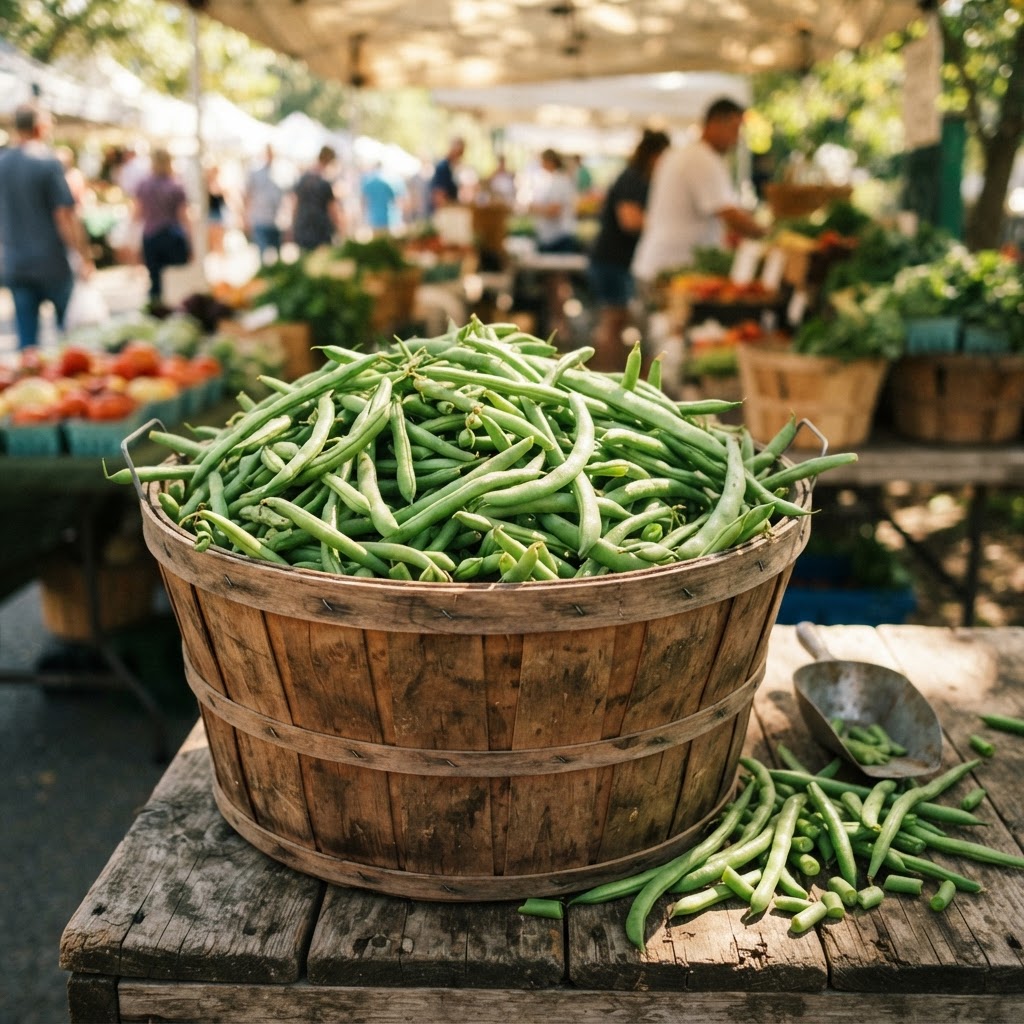
If you've been watching your calendar and waiting for this moment, it's here. Green beans and pole beans are in full summer swing, and right now they are as fresh, tender, and flavorful as they're going to get all year. There's a reason this is one of the most eagerly anticipated harvests of the Kentucky summer — nothing compares to a bowl of beans that were picked at the peak of their season and haven't sat around losing their snap.
At Open Air Market Produce Stand on Barbourville Road in London, Kentucky, we've been watching the bean haul come in with real excitement. The pods are full, the color is deep, and the beans have that satisfying firmness that tells you they're ready. Whether you grew up stringing beans on a front porch or you're discovering them for the first time, now is absolutely the moment to stock up. Stop in any day this week — Monday through Friday from 10 to 6, Saturday starting at 9, or Sunday from 11 to 6 — and grab a bag or a bushel before the season moves on.
Green Beans vs. Pole Beans: What's the Difference?
People sometimes use these names interchangeably, and honestly, in a home kitchen context, that's mostly fine — but there are real differences worth knowing. Standard green beans (also called bush beans) tend to be shorter, more uniform, and very tender. They're excellent for quick cooking: a simple sauté, a light steam, or tossing into a pasta salad. They're mild and sweet, and they cook fast.
Pole beans are a different experience altogether. They're longer, meatier, and have a more pronounced, earthy flavor that Kentuckians have loved for generations. They take a little longer to cook, but that extra time is exactly what makes them so good in a slow-simmered pot. The pods have more texture, the flavor is more complex, and there's a reason old-time Kentucky cooks swore by them. If you've never done a side-by-side taste between a quickly blanched green bean and a long-cooked pole bean with a little ham hock, you owe yourself that comparison. Both are worth your time — and we carry both right now at the stand.
The Kentucky Way: Slow-Cooked Pole Beans Done Right
Let's talk about the most important pole bean recipe in the Kentucky canon: the long-cooked, seasoned pot of beans that has been a Sunday dinner staple in this part of the country for over a century. This isn't a complicated dish, but it rewards patience and it rewards good beans — which means starting with what you pick up fresh at a produce stand in London, KY.
Start by stringing your pole beans — running your thumbnail down the seam to pull the string off each side — then snapping them into two or three-inch pieces. Rinse them well. In a heavy pot, add your beans and cover with water by a couple of inches. Add your seasoning: a smoked ham hock, a chunk of salt pork, or even a few strips of thick-cut bacon if that's what you have. Bring everything to a boil, then drop it down to a low, lazy simmer. Cook for at least an hour and a half, checking the liquid occasionally. The beans should become very tender — almost silky — and the pot likker (that savory cooking liquid) should turn a deep, beautiful amber. Season with salt and a little black pepper toward the end. Serve with cornbread and sliced tomatoes, and you have one of the great meals of the Kentucky summer. There is no shortcut that matches it.
Quick Cooking Methods for Fresh Green Beans
Not every night calls for a slow pot. Fresh green beans are incredibly versatile, and when they're this tender and snappy, sometimes the best approach is to keep it simple and fast. One of the easiest preparations is a quick blister in a hot cast iron skillet. Heat the pan until it's very hot, add a splash of oil, and throw in your trimmed green beans. Let them sit undisturbed for a minute or two until they char slightly on one side, then toss and repeat. Finish with a squeeze of lemon, a pinch of red pepper flakes, and flaky salt. It takes ten minutes and it's genuinely stunning.
Another weeknight favorite is green beans with garlic and almonds — blanch the beans in salted boiling water for three to four minutes, then shock them in ice water to lock in that brilliant green color. In a skillet, toast slivered almonds until golden, add sliced garlic, then toss in the beans. A little butter, a splash of white wine vinegar, and you're done. This is the kind of side dish that makes people ask for the recipe. And if you want to add them to a cold pasta salad or a Niçoise-style dish, that same blanch-and-shock method is your foundation — just toss the cooled beans with whatever dressing you love.
How to Can Green Beans at Home (Pressure Canning Only)
Here's where we need to be very direct: green beans are a low-acid vegetable, and that means they absolutely must be pressure canned — not water bath canned. This is not optional, and it's not a matter of personal preference. Water bath canning is not safe for green beans because it cannot reach the temperatures needed to eliminate the risk of botulism. If you've seen old recipes that call for water bathing green beans, please set them aside. A good quality pressure canner is the only right tool for this job.
The process itself is straightforward once you have your equipment. Wash and trim your beans, then snap or cut them into one to two-inch pieces. Pack them tightly into clean, hot quart or pint jars, leaving one inch of headspace. Add a half teaspoon of canning salt per pint or one teaspoon per quart if you like (this is for flavor, not preservation). Wipe the jar rims clean, apply lids and bands fingertip-tight, and process in your pressure canner at 10 pounds of pressure (adjusted for altitude if needed) — 20 minutes for pints, 25 minutes for quarts. Let the canner depressurize naturally, then remove jars and allow them to cool undisturbed for 12 to 24 hours. Check seals before storing. Done right, those jars will carry the flavor of August all the way into February, and there is something deeply satisfying about that.
If you're new to pressure canning, the National Center for Home Food Preservation (nchfp.uga.edu) is the gold standard resource. Follow tested recipes, follow the instructions for your specific canner model, and don't cut corners. The reward — a pantry shelf lined with jars of beautiful green beans from Laurel County's own summer season — is absolutely worth learning to do it correctly.
Freezing Green Beans: The Fastest Path to Year-Round Freshness
If pressure canning feels like a project for another weekend, freezing is your best friend right now. Properly frozen green beans hold their flavor and texture remarkably well, and the process is genuinely simple. The key step that most people skip — and shouldn't — is blanching before freezing. Without it, enzymes in the beans continue to break down flavor and texture even in the freezer, and within a few months you'll have mushy, dull beans that disappoint.
Blanching is easy: bring a large pot of water to a full rolling boil. Drop in your trimmed, snapped beans and cook for exactly three minutes — no more. Immediately transfer them to a large bowl of ice water and let them sit for three minutes to stop the cooking. Drain them thoroughly and spread them in a single layer on a baking sheet lined with a clean kitchen towel or paper towels. Pat them as dry as you can — moisture is the enemy of good frozen beans. Freeze on the sheet for an hour or two until individually firm, then pack into zip-top freezer bags, press out all the air, label with the date, and store for up to 12 months. When you pull them out in January for a pot of slow-cooked beans or a quick weeknight stir-fry, you'll taste exactly why it was worth doing right.
Right now is genuinely the perfect window. The beans coming into our stand at 1594 Barbourville Road in London are at peak quality, and buying a large quantity now to freeze means you're essentially locking in summer at its best. It's one of the smartest things you can do with a Saturday morning and a big pot of boiling water.
Come Get Your Beans Before Summer Moves On
Bean season in Kentucky is glorious, but it doesn't last forever. The window when they're at their absolute freshest and most flavorful is measured in weeks, not months — and we're right in the middle of it now. Whether you want a small bag for tonight's dinner, a half-bushel to put up in jars, or a big haul to blanch and freeze for the winter, Open Air Market Produce Stand has you covered. We've been serving the London, Kentucky community and all of Laurel County since 1984, and there's a reason families keep coming back every summer.
We're easy to find — 1594 Barbourville Road in London, with plenty of parking and a friendly crew ready to help you pick what you need. Open seven days a week: Monday through Friday 10 to 6, Saturday 9 to 6, and Sunday 11 to 6. Come see what else is looking great alongside the beans this week — summer is putting on a full show at the stand, and we'd love to see you.
1594 Barbourville Rd, London, KY 40744 · Mon–Fri 10–6 · Sat 9–6 · Sun 11–6
Get Directions
Serving London, Kentucky since 1984, Open Air Market is the oldest and longest-running produce market in Laurel County. For over 40 years, our family-owned stand at 1594 Barbourville Rd has been the trusted source for fresh, seasonal fruits and vegetables in southeastern Kentucky. We hand-select every item for ripeness and quality — the way it's been done for four decades. Open 7 days a week.