Green Beans and Pole Beans: How to Cook, Can, and Freeze the Summer Harvest
Green beans and pole beans are one of summer's most versatile vegetables — and right now they're at their absolute best. Here's how to make the most of every pound you bring home.
Right Now, the Beans Are Worth Talking About
There are certain vegetables that mark summer more quietly than others — no fireworks, no fanfare — just a steady, dependable abundance that serious home cooks know to take full advantage of. Green beans and pole beans are exactly that. They don't shout the way a ripe tomato does, but they show up every summer ready to work, and right now they're looking exceptional at Open Air Market Produce Stand on Barbourville Road in London, Kentucky.
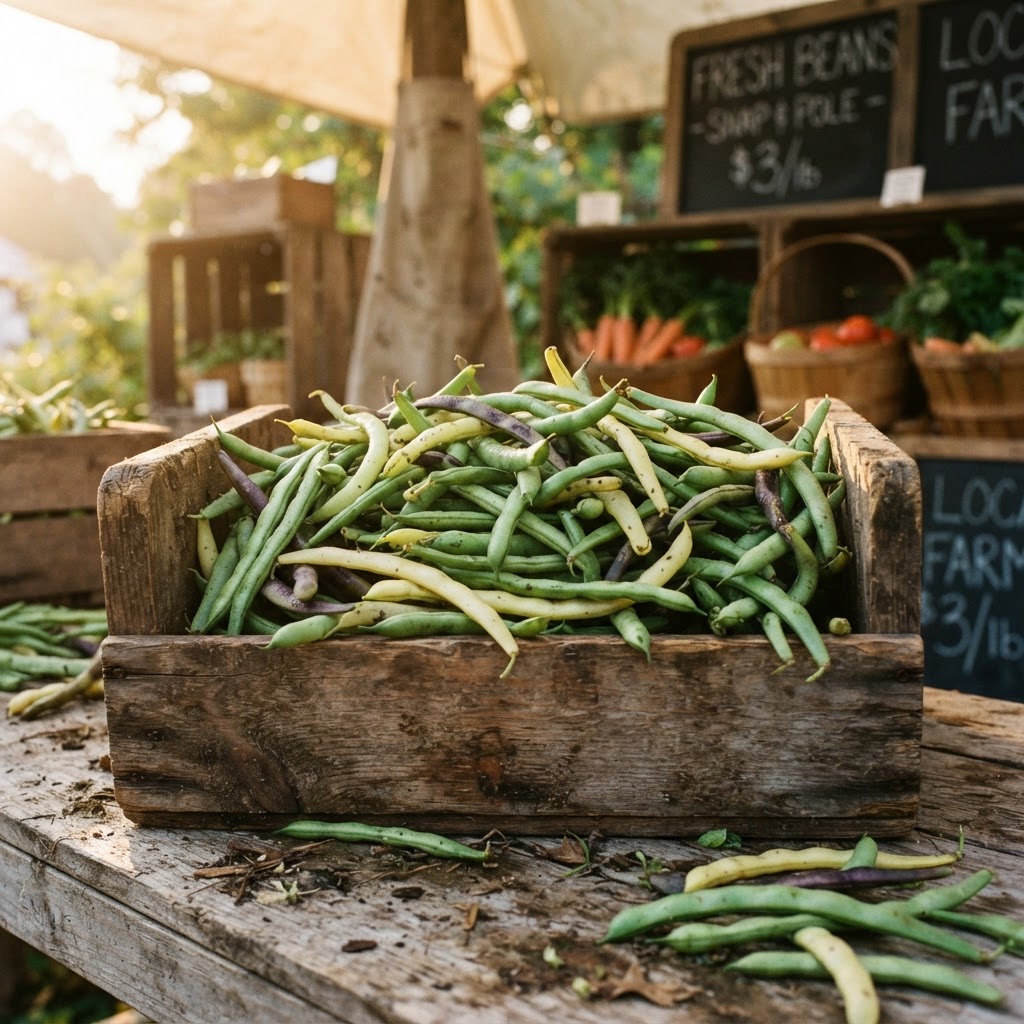
If you've been stopping by the stand this week, you've already seen the bins. The beans are firm, bright, and snapping the way they should — which is your first and best quality test right there at the display. When you can hear and feel that clean, crisp snap, you know you've got a fresh bean. Limp or rubbery means they've been sitting too long. These haven't.
The Simple Truth About Cooking Green Beans
Let's start with the most basic thing, because it gets overlooked: green beans don't need much. A pot of salted boiling water, three to five minutes for fresh beans, and you've got a side dish that holds its own against almost anything on the plate. The key is pulling them out while they're still bright green and have a little bite left. Overcooking is the number one mistake people make, and it turns a great vegetable into something forgettable.
That said, if you grew up in Eastern Kentucky or anywhere in Appalachia, you probably know a different tradition entirely — and it's just as valid. Long-cooked green beans, sometimes called 'leather britches' or simply 'soup beans' companions, simmered low and slow with a ham hock or a piece of seasoned pork, are a completely different dish with a completely different purpose. They go soft and silky, absorbing all that savory depth, and they're the kind of comfort food that makes a cold winter meal something to look forward to. Both approaches are right. It just depends on what you're after.
For something in between, try sautéing blanched green beans in a skillet with a little butter, minced garlic, and a squeeze of lemon. Finish with a pinch of red pepper flakes and some toasted almonds if you have them. It takes about ten minutes and it works as an easy weeknight side that feels a little more special than boiled beans straight from the pot.
Pole Beans vs. Green Beans: Is There Actually a Difference?
You'll often see both terms used at produce stands, and there's a fair amount of overlap — so it's worth a quick explanation. 'Green bean' is the broad category. 'Pole bean' refers specifically to a variety that grows on a vine or pole rather than a compact bush. Pole beans tend to be a bit longer, sometimes slightly more robust in flavor, and many traditional cooks prefer them for canning or long cooking because they hold their texture a little better.
Bush beans — the more compact variety — are often what you find in grocery stores year-round because they're easier to harvest mechanically. But when you're shopping fresh at a local produce stand, especially mid-August in Kentucky, you're more likely to encounter pole beans with some real character to them. Either way, if they're fresh and firm, cook them the same way. The biggest difference you'll taste is freshness, not variety.
Canning Green Beans: A Step-by-Step Overview
Green beans are a low-acid vegetable, which means they absolutely must be pressure-canned — not water bath canned. This is not a point of debate; it's a food safety requirement. Water bath canning is appropriate for high-acid foods like tomatoes, pickles, and jams. For green beans, you need a pressure canner that reaches 10 pounds of pressure (adjusted for altitude) to safely destroy the risk of botulism. If you don't have a pressure canner and you plan to put up beans, it's worth the investment.
Here's a simple process that works well: Wash and snap your beans into roughly two-inch pieces, removing the stem ends. Pack them tightly into clean quart or pint mason jars. Add a half teaspoon of canning salt per pint jar (one teaspoon per quart) — this is optional for flavor but traditional. Fill jars with boiling water, leaving about an inch of headspace. Wipe the rims clean, apply two-piece lids, and process in your pressure canner — 20 minutes for pints, 25 minutes for quarts at 10 pounds of pressure. Let the pressure drop naturally before opening.
When those jars line up on your pantry shelf in October, you'll be glad you did it. A jar of home-canned green beans opened in February, warmed with a little butter and salt, is one of the quieter rewards of putting in summer work.
Freezing Beans Is Faster and Still Worth Doing
Not everyone has a pressure canner, and that's perfectly fine. Freezing is a great option for green beans, and the method is simpler than most people think. The one non-negotiable step is blanching — briefly cooking the beans in boiling water before freezing them. Skip this step and you'll end up with mushy, off-colored beans after a few months. Blanching stops the enzymes that break down flavor and texture over time.
To freeze green beans properly: bring a large pot of water to a full boil. Drop in your washed, trimmed beans and let them cook for exactly three minutes. Pull them out immediately and plunge them into a bowl of ice water for another three minutes to stop the cooking. Drain them thoroughly, spread them on a baking sheet lined with a towel, and pat dry. Freeze them on the sheet first so they don't clump together, then transfer to freezer bags and label with the date. Stored this way, they'll keep well for up to a year and cook beautifully straight from frozen.
How Much Should You Buy, and What Should You Look For?
If you're planning to can or freeze, buy in quantity — you'll need roughly one and a half to two pounds of fresh beans to yield a single quart jar when packed. For a family of four doing a modest canning run, buying ten to fifteen pounds at once makes the effort worthwhile. Open Air Market is open seven days a week, so you can swing by more than once if you want to spread out the work over a few trips. Monday through Friday we're here from 10 a.m. to 6 p.m., Saturday from 9 a.m. to 6 p.m., and Sunday from 11 a.m. to 6 p.m. There's plenty of parking, so don't let that be a reason to hesitate.
When selecting beans, look for pods that are firm and smooth without visible bulges from the seeds inside. A slight bulge means the bean has matured past peak tenderness and will be tougher to eat fresh, though still fine for canning or long cooking. Color should be vivid and consistent — pale or yellowing beans are past their prime. And that snap test is always your best friend. Pick one up and try it. A good bean tells you immediately.
Don't Let August Pass Without Putting Some Up
Here's the honest truth about late summer produce: the window is real, and it closes. Green beans and pole beans have a season, and mid-August is squarely in the middle of it. If you've been meaning to do a canning or freezing project and keep putting it off, this week is the right time to start. The quality is there, the quantities are available, and the effort you put in now pays dividends every month between now and next summer.
Come see us at 1594 Barbourville Road in London, Kentucky — we're the oldest running produce market in Laurel County, and we've been doing this since 1984. Whether you're cooking tonight's supper or stocking your pantry for winter, we've got what you need. Ask us what's looking especially good when you come in — we're always happy to talk produce.
1594 Barbourville Rd, London, KY 40744 · Mon–Fri 10–6 · Sat 9–6 · Sun 11–6
Get Directions
Serving London, Kentucky since 1984, Open Air Market is the oldest and longest-running produce market in Laurel County. For over 40 years, our family-owned stand at 1594 Barbourville Rd has been the trusted source for fresh, seasonal fruits and vegetables in southeastern Kentucky. We hand-select every item for ripeness and quality — the way it's been done for four decades. Open 7 days a week.