Fresh Sweet Corn: How to Pick It Right, Keep It Sweet, and Cook It Perfectly
There's a narrow, golden window when sweet corn is absolutely perfect — and right now, we're in it. Here's everything you need to know to pick the best ears, keep them sweet at home, and cook them in ways that'll have everyone reaching for seconds.
Right Now Is the Sweet Spot — And It Won't Last Long
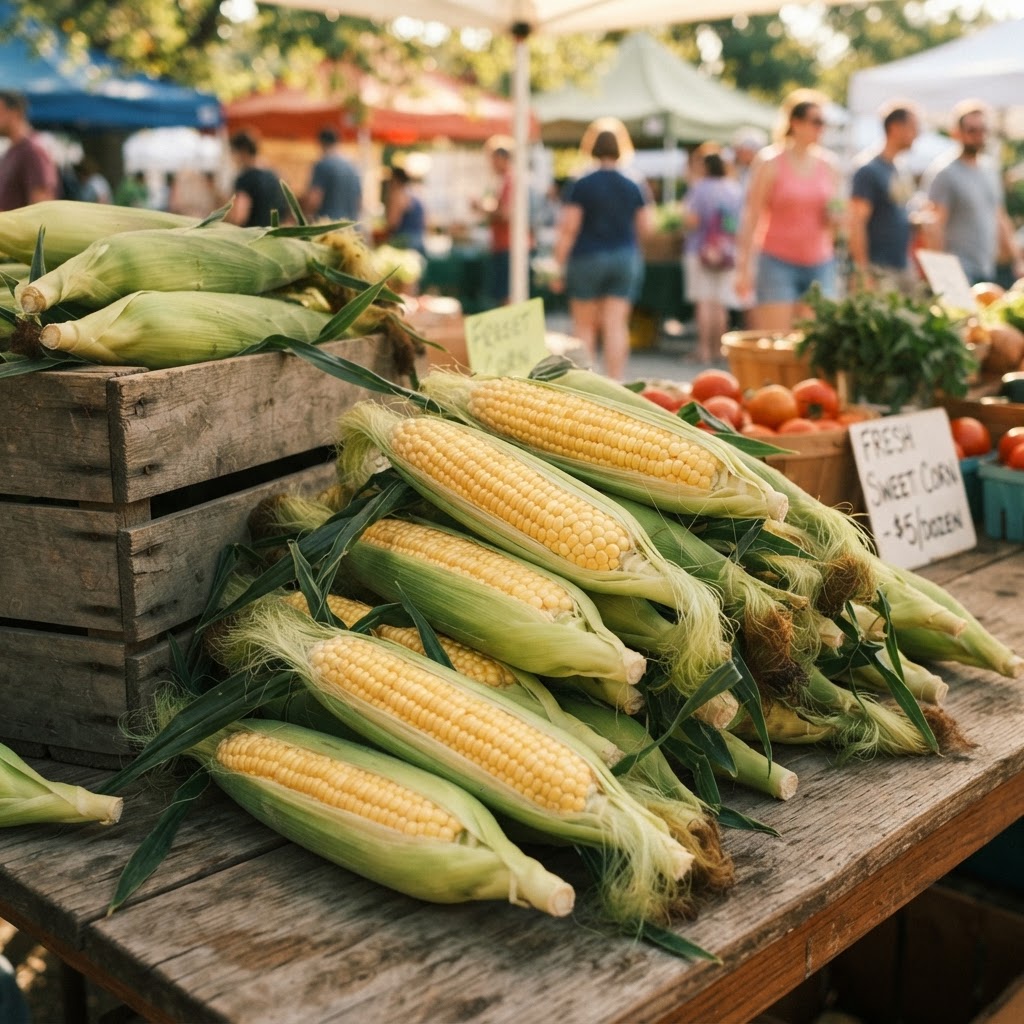
Sweet corn has a reputation for being simple summer food, and that's exactly right — but simple doesn't mean easy to get perfect. The truth is, sweet corn has one of the shortest windows of peak quality of any vegetable we carry. When it's right, it's incomparably good: tender, juicy, bursting with natural sugar. When it's past its moment, it's starchy and flat. We're smack in the middle of that peak window right now, in late July, and if sweet corn has been on your mind even once this summer, this week is the week to act on it.
At Open Air Market Produce Stand on Barbourville Road, we're stocked up and the corn is coming in fresh. Stop by any day this week — we're open Monday through Friday from 10 to 6, Saturday from 9 to 6, and Sunday from 11 to 6 — and you'll find ears that were selected for quality and freshness. We'll walk you through picking the best ones yourself, or just trust the pile. Either way, you're going home with something worth cooking tonight.
How to Pick an Ear of Corn Like You Actually Know What You're Doing
There's a ritual at every produce stand: the customer who peels back the husk of every single ear of corn before choosing. We understand the instinct, but here's the thing — you don't need to do that, and doing it actually damages the corn for the next buyer. Once the husk is pulled back, moisture escapes and the ear starts to decline faster. Instead, learn to read the outside.
Start with the husk. It should be bright green, tight, and slightly cool to the touch — not yellow, papery, or dried out. Dry husks are a sign the corn has been sitting too long. Next, feel the tip through the husk with your fingers. You want to feel kernels that go all the way to the very end — a blunt, full tip means the ear filled in well. A pointy tip that feels hollow means the last few rows didn't develop. Finally, look at the silk. Fresh corn has silk that's slightly sticky or moist and light brown or golden at the tips. Dark, completely dried, or slimy silk both signal the same thing: this ear is either too old or too far past peak. Find the ones with lively-looking silk and a firm, filled-out feel, and you're golden — literally.
The Clock Starts the Moment It's Picked — Here's How to Slow It Down
Here's a fact that changes how seriously you take fresh sweet corn: the natural sugars in corn begin converting to starch almost immediately after harvest. The older the corn, the less sweet it tastes. This is why corn eaten within hours of being picked — the kind you'd get from a roadside stand on a hot July afternoon — tastes so dramatically different from corn that's been sitting in a refrigerated warehouse for days.
Once you bring your corn home from the stand, resist the urge to shuck it right away. Leave the husks on. They act as a natural protective layer, slowing that sugar conversion and keeping moisture in. Store the ears in the refrigerator — the crisper drawer is ideal — and try to use them within one to two days for the best flavor. If life gets in the way and you end up with more corn than you can eat fresh, blanch the ears in boiling water for about four minutes, cut the kernels off the cob, and freeze them in zip-lock bags. Frozen sweet corn done this way in peak season will taste better than anything from a freezer bag you'd buy at the grocery store in January. It's one of those small preservation wins that pays off all winter long.
Four Ways to Cook Sweet Corn (Including One You Probably Haven't Tried)
Boiling is classic, and it works — drop shucked ears into a big pot of boiling, lightly salted water for about four to five minutes. No longer. Overcooked corn turns mealy, and peak-fresh corn doesn't need much time at all. A pat of butter and a pinch of salt is all it needs, and that's not being lazy — that's knowing when something is already perfect.
Grilling is where a lot of people discover their new favorite method. Leave the husks on, soak the ears in cold water for about ten minutes, then lay them directly on a medium-high grill for fifteen to twenty minutes, turning every few minutes. The husks char and steam the corn inside simultaneously. Pull them off, peel back the husks (they make a natural handle), and you've got corn with a subtle smokiness and incredible juiciness. If you want actual grill marks and a slightly caramelized exterior, shuck the ears fully and grill them directly on the grates for eight to ten minutes, turning every couple of minutes.
The method that surprises people most? The microwave. It sounds counterintuitive, but one or two ears in the microwave — husks still on, completely untouched — for about three to four minutes per ear produces some of the most tender, naturally sweet corn you'll ever taste. The husk traps the steam perfectly. Let it rest for two minutes, then cut the bottom end off (about an inch up from the base), squeeze from the silk end, and the whole ear slides out clean with zero silk. It's almost too easy. And if you're feeling adventurous, take your cooked corn and cut the kernels off for a quick corn salad with lime juice, a little cotija cheese, cilantro or fresh basil, and a touch of chili powder. Summer in a bowl.
Why Buying Local Corn This Week Actually Matters
When you buy sweet corn from a place like Open Air Market Produce Stand — a stand that's been part of the London, Kentucky community since 1984 — you're not just getting fresher produce than what a chain grocery store can offer. You're also supporting the kind of business that's made Laurel County a place with real character. There's a reason people make the drive to Barbourville Road every summer. The produce is better, yes. But there's also something about the experience of standing at an outdoor market, picking your own ears of corn out of a pile, smelling the green husk and the summer air, that a climate-controlled supermarket just can't replicate.
For families with kids, this time of year is also a quiet teaching moment. Letting a child pick out an ear of corn, helping them understand what makes it fresh, and then involving them in shucking it at home builds a connection to real food that sticks. More than a few of our longtime customers grew up coming here as kids. That kind of thing doesn't happen at a grocery store. It happens at a place like this, in a community like ours, during a summer like this one.
Corn as an Ingredient: Beyond the Cob
Once you've had your fill of corn on the cob — and it might take a few nights — there are a dozen other ways to use those fresh kernels. A summer corn chowder made with fresh-cut kernels, a little cream, onion, and herbs is one of the most comforting things you can make in July, especially if the evenings cool down. It comes together in about thirty minutes and gets better as leftovers the next day.
Sweet corn also adds a natural sweetness and texture to salsas, grain bowls, and even pizza. Shave the kernels off a raw ear and toss them into a summer salsa with diced tomatoes, jalapeño, red onion, and cilantro — the raw corn adds a crisp, almost candy-like bite that makes the whole thing pop. And if you enjoy baking, fresh corn kernels folded into a cast iron skillet of jalapeño-cheddar cornbread is the kind of thing that disappears within minutes at any cookout or potluck. The fresh corn keeps the cornbread moist and adds a sweetness that dried or canned corn simply can't match. When you're starting with ears you picked up fresh from a stand in London, KY, the quality difference shows up in everything you make.
Come See Us Before the Season Turns
Sweet corn season feels long when you're in the middle of it, but it has an end date, and late July means we're already in the back half. A few more weeks of peak quality, and then the ears will taper off and the fall vegetables will start taking their place on the tables. That transition is its own kind of beautiful — pumpkins, winter squash, and apples are not far behind — but right now, corn deserves your full attention.
We're at 1594 Barbourville Road in London, with easy access and plenty of parking. No crowded parking lots, no long checkout lines. Just a well-stocked outdoor stand with fresh produce and people who are happy to help you find exactly what you're looking for. Whether you're buying a dozen ears for a weekend cookout, stocking up to freeze for winter, or just grabbing a few for tonight's dinner, we'll have what you need. Come out this week while the corn is at its very best — you'll taste the difference.
1594 Barbourville Rd, London, KY 40744 · Mon–Fri 10–6 · Sat 9–6 · Sun 11–6
Get Directions
Serving London, Kentucky since 1984, Open Air Market is the oldest and longest-running produce market in Laurel County. For over 40 years, our family-owned stand at 1594 Barbourville Rd has been the trusted source for fresh, seasonal fruits and vegetables in southeastern Kentucky. We hand-select every item for ripeness and quality — the way it's been done for four decades. Open 7 days a week.