Fresh Sweet Corn: How to Pick It, Keep It, and Cook It Right
There's nothing quite like biting into a perfectly cooked ear of sweet corn at the height of summer. Here's everything you need to know about picking the best ears, keeping them fresh, and cooking them in ways that'll make your whole table happy.
This Is the Week You Want to Be Eating Sweet Corn
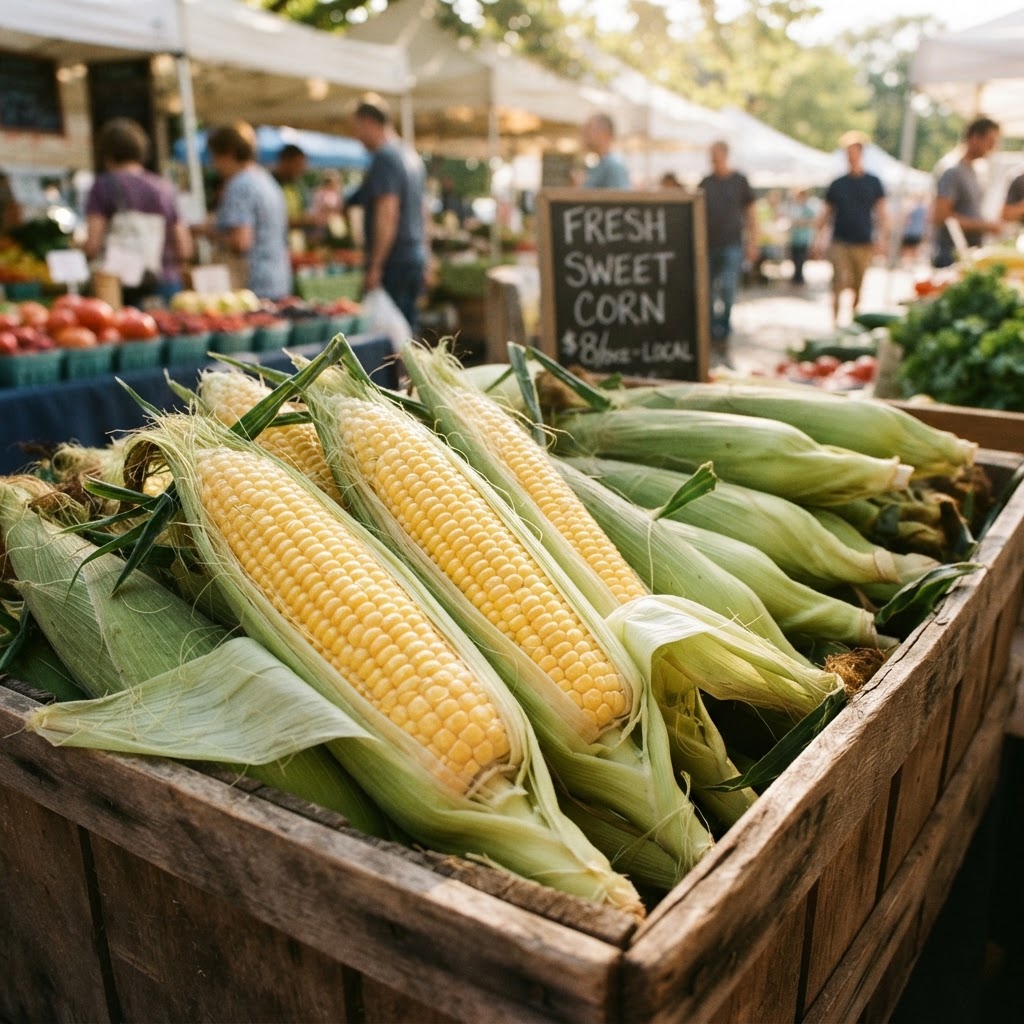
Mid-August sweet corn is not just good — it's the kind of good that people talk about for the rest of the year. The sugars are at their peak, the kernels are fat and bursting with juice, and the window to enjoy corn this fresh is shorter than most people realize. Once the season tips past its peak, the texture gets starchy and the flavor dulls fast. Right now, though? We're right in the middle of it.
At Open Air Market Produce Stand on Barbourville Road here in London, Kentucky, we've got beautiful ears of sweet corn stacked up and ready to go. Whether you're planning a backyard cookout, loading up for a week of summer meals, or wanting to put some away in the freezer before the season slips by, this is the time to come in and grab a bunch. We're open seven days a week — Monday through Friday from 10 to 6, Saturday from 9 to 6, and Sunday from 11 to 6 — so there's plenty of opportunity to stop in whenever it fits your schedule.
How to Pick a Great Ear of Corn (Without Peeling It in the Store)
Choosing sweet corn is a skill, and once you know what to feel for, you'll never second-guess yourself again. Start with the husk — it should be bright green, slightly moist, and tightly wrapped around the ear. If the husk is yellowing, dry, or pulling away from the tip, that corn has been sitting around too long. Give the ear a gentle squeeze through the husk; you should feel firm, packed rows of kernels all the way to the top with no gaps or soft spots.
Next, check the silk at the top. You want it to look slightly damp and golden to light brown — not completely dried out and not black and slimy. The silk is actually a great freshness indicator because it dries out quickly once the corn is picked. A little browning on the very tips is normal and totally fine; what you're avoiding is silk that's shriveled all the way down into the husk.
Finally, pay attention to the stem end of the ear. A fresh-cut stem that still looks moist and light-colored is a sign you're holding a recently picked ear. As corn ages, the stem dries out and darkens. At our produce stand in London, KY, we turn our corn over regularly to keep the freshest ears available — but these tips will serve you well anywhere you're shopping for produce.
The Clock Is Ticking: How to Store Sweet Corn the Right Way
Here's something a lot of people don't know: sweet corn starts converting its sugars into starch almost immediately after it's picked. That means the sooner you eat it, the better it tastes — and the way you store it between the stand and your table makes a real difference.
The single best thing you can do is keep the husks on until you're ready to cook. The husk acts as a natural wrapper that slows down moisture loss. Wrap the unhusked ears loosely in a damp paper towel, then slide them into a plastic bag and put them in the coldest part of your refrigerator — ideally the crisper drawer. Stored this way, sweet corn will hold its quality for two to three days, though one to two days is really ideal.
If you bought more than you can eat fresh — which is easy to do when the corn is this good — don't let it go to waste. Freezing sweet corn is simple and the results are genuinely great. Shuck and blanch the ears in boiling water for four minutes, then plunge them into ice water to stop the cooking. Once they're cool, cut the kernels off the cob with a sharp knife, spread them on a sheet pan to freeze individually, then transfer to freezer bags. Come January, those kernels will taste like a little piece of summer.
Five Ways to Cook Sweet Corn That Go Beyond the Butter Dish
Corn slathered with butter and salt is a masterpiece — no argument there. But if you've got a pile of fresh ears on your counter, it's worth exploring a few other methods that bring out different dimensions of that natural sweetness.
**Grilled corn with smoked butter:** Leave the husks on, soak the ears in water for 20 minutes, then lay them right on a hot grill for about 15 to 20 minutes, turning occasionally. The steam trapped inside the husk cooks the corn perfectly while the outer layers char just enough to add a subtle smokiness. Pull back the husks, rub with a compound butter made from softened butter, smoked paprika, and a pinch of garlic salt, and you've got something special.
**Skillet corn:** This is a classic Appalachian preparation, and it couldn't be simpler. Cut the kernels off four or five ears right into a cast iron skillet with a little butter or bacon drippings. Cook over medium heat, stirring occasionally, until the corn starts to caramelize and turn golden in spots — about 12 to 15 minutes. Season with salt, pepper, and a little cream if you want it rich. This dish is pure comfort.
**Corn and tomato salad:** Shave raw kernels straight off the ear — no cooking needed — and toss them with ripe chopped tomatoes, sliced basil, a drizzle of olive oil, and a splash of red wine vinegar. Salt generously, let it sit for 10 minutes, and serve at room temperature. If you've been picking up fresh tomatoes at our produce stand in Laurel County alongside your corn, this salad is the reason why summer exists.
**Corn chowder:** Roughly cut the kernels off six ears and use the back of your knife to scrape the cobs and get all that milky corn juice — this is the secret to a truly creamy chowder without a lot of cream. Sauté onion and celery in butter, add diced potato, the corn and its liquid, and enough chicken or vegetable broth to cover. Simmer until the potatoes are tender, then stir in a splash of heavy cream and season to taste. It's a summer soup that somehow also feels like fall.
One Tip That Changes Everything: Don't Overcook It
If there's one mistake that robs people of the full joy of sweet corn, it's overcooking. Fresh summer corn is already tender and sweet — it doesn't need much time at all to be ready. For boiled corn, bring a large pot of water to a full rolling boil (no salt needed — some people say salt toughens the kernels, though others disagree), drop in the shucked ears, and cook for just three to four minutes. That's it. Pull them out, add your butter, and eat immediately.
The same principle applies to grilling or roasting — you're heating it through and building a little color, not cooking it down. Overcooked corn turns mushy and loses the snappy pop of the kernel that makes it so satisfying to eat. When in doubt, err on the side of less time. You can always cook it a little more, but you can't undo a pot of corn that's gone too long.
Stock Up While the Season Is Here
Sweet corn season in Kentucky is one of those things that feels like it'll last forever while it's happening — and then suddenly it's over. By the time September arrives, the quality drops off sharply, and by October the fresh corn we know and love is just a memory until next year. We're in the sweet spot right now, and our shelves at Open Air Market Produce Stand are well-stocked with beautiful ears.
We've been serving the London, Kentucky community and all of Laurel County since 1984, and summer corn has always been one of those items that brings people in week after week. Families come in, grab a big bag of ears, and come back a few days later for more. That's just how good fresh produce in season tends to work. If you're searching for the best fruits and vegetables near you this summer, you know where to find us — 1594 Barbourville Road in London, with plenty of parking and everything you need for a great summer table. Come see us this week while the corn is at its very best.
1594 Barbourville Rd, London, KY 40744 · Mon–Fri 10–6 · Sat 9–6 · Sun 11–6
Get Directions
Serving London, Kentucky since 1984, Open Air Market is the oldest and longest-running produce market in Laurel County. For over 40 years, our family-owned stand at 1594 Barbourville Rd has been the trusted source for fresh, seasonal fruits and vegetables in southeastern Kentucky. We hand-select every item for ripeness and quality — the way it's been done for four decades. Open 7 days a week.